Overview
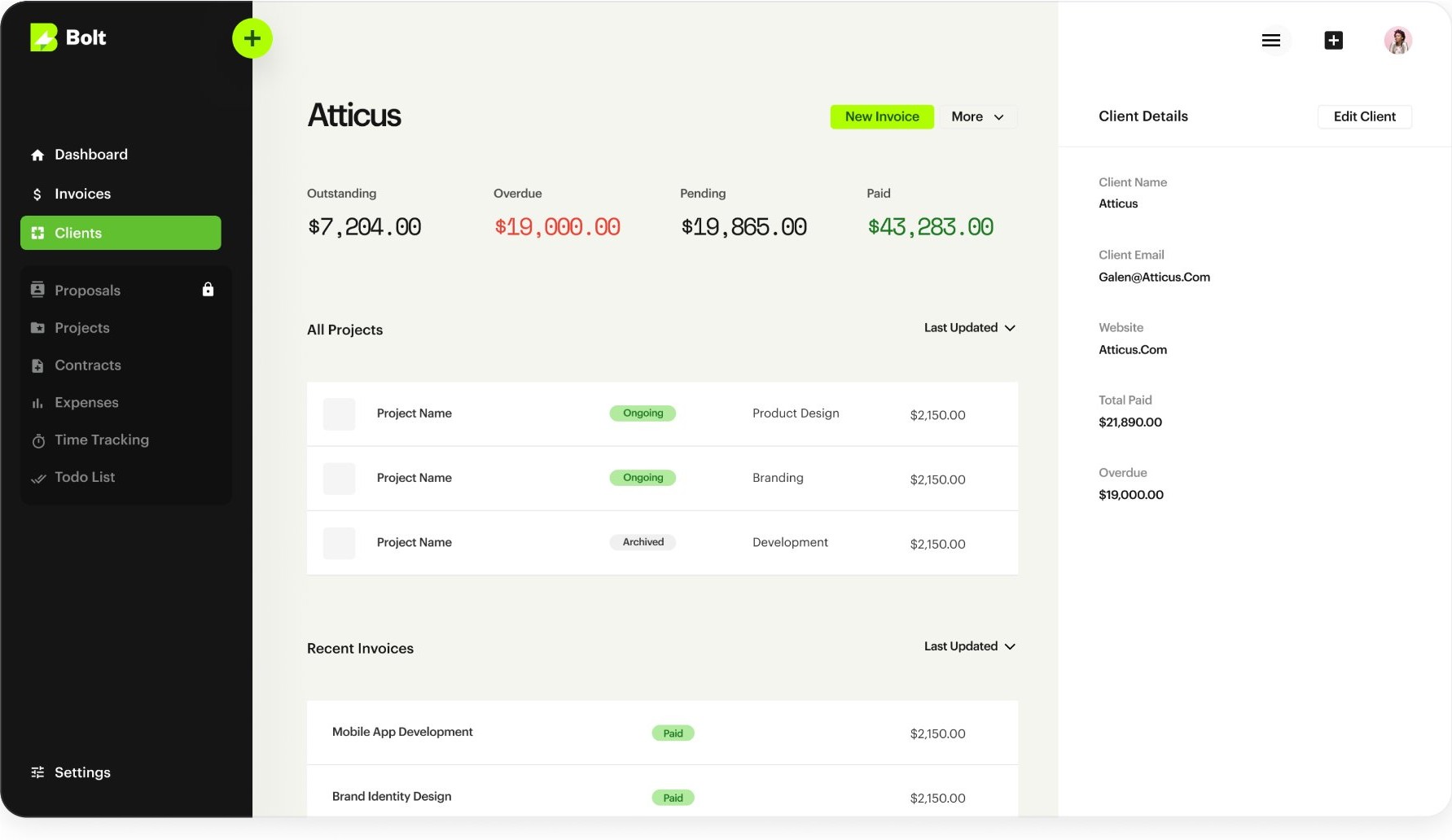
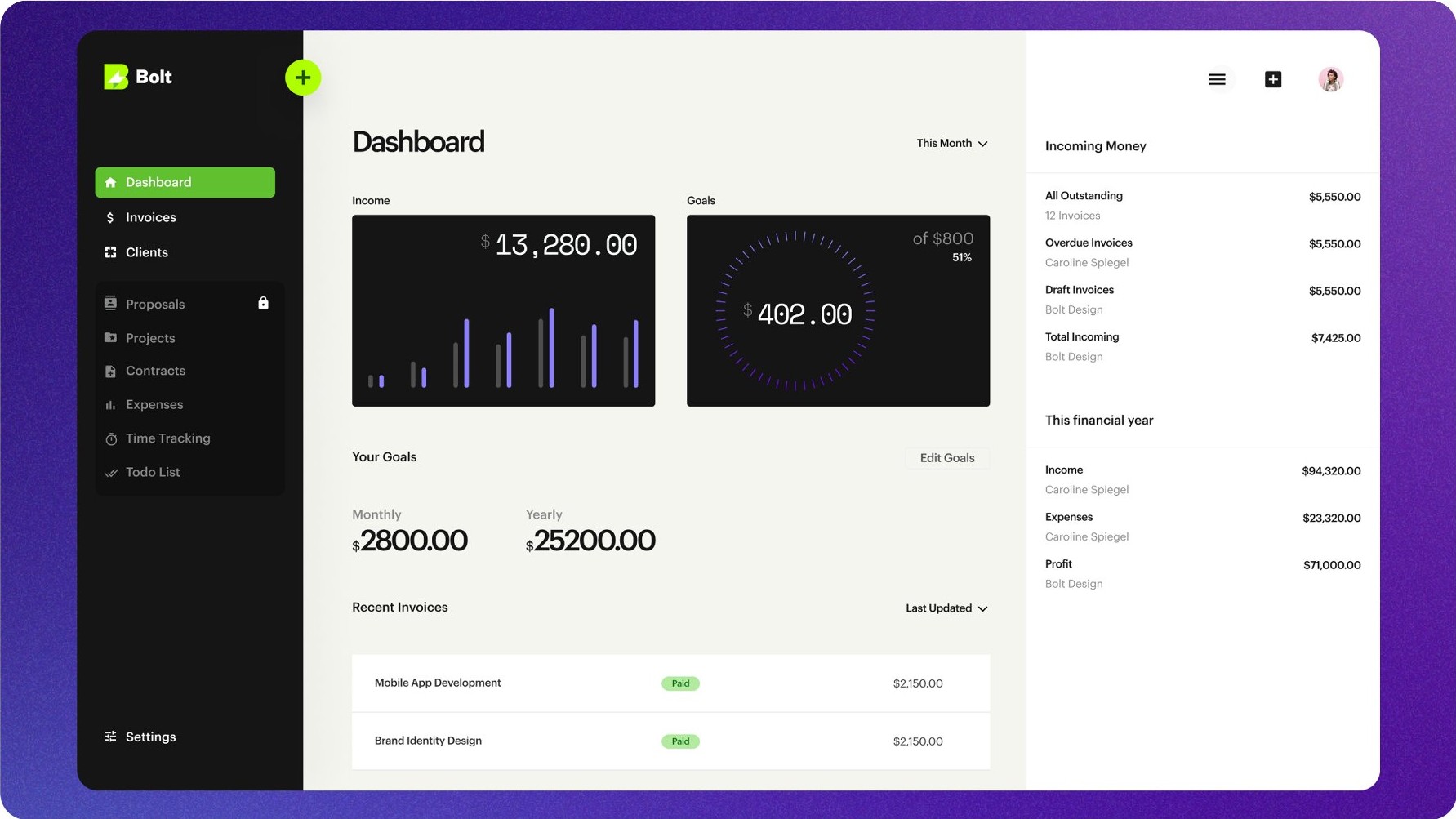
Bolt is a project management app designed for freelancers and small agencies. It helped users manage invoices, clients, proposals, and project tasks in one place.
As the number of freelancers grew — with gig work rising from 10.1% in 2005 to 15.8% in 2017 — many professionals moving from full-time jobs had to manage clients, projects, accounts, and taxes on their own. Existing tools were often too complex for small teams.
Bolt aimed to solve this by offering a simple, easy-to-use platform with automated workflows. It initially launched as a free invoicing tool, with plans to expand into proposals to help freelancers close deals.
Vision
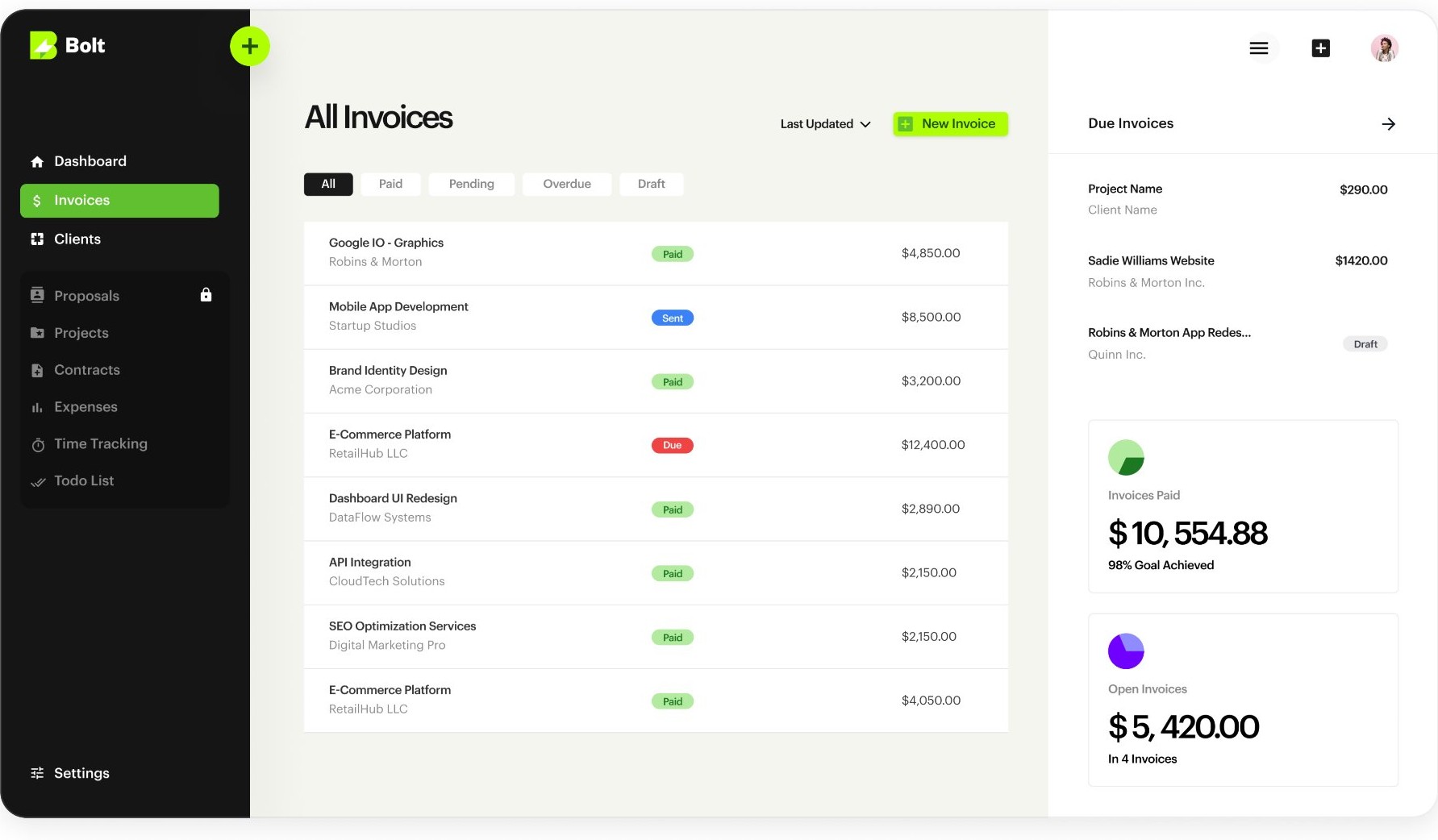
The Bolt team had a clear and ambitious product vision: to help small businesses manage invoices more efficiently. The platform was designed to automate the entire invoicing workflow, reducing manual work and simplifying financial operations for business owners.
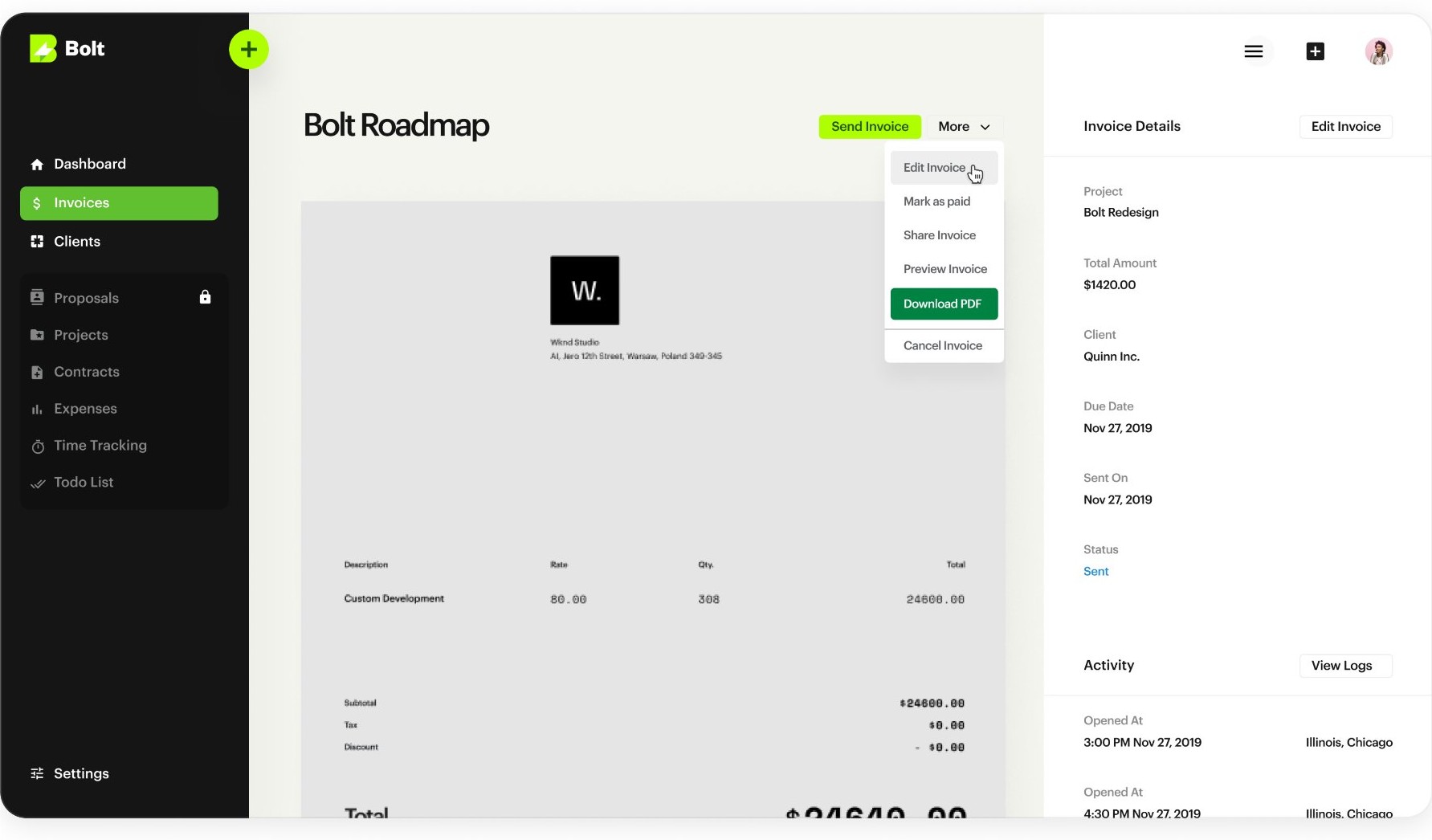
To support this vision, the invoicing system needed to include several key capabilities, such as recurring invoices, payment support via PayPal and ACH bank transfers, customizable invoice templates (initially offering two styles: Simple and Modern), shareable invoice links, email delivery, and the ability to export invoices as PDFs.
My goal was not only to design a system that supported these functional requirements, but also to elevate the overall user experience. I focused on creating an interface that made invoicing faster, clearer, and more intuitive—while also introducing modern interactions that made the product feel more engaging and enjoyable to use.
Research
The product primarily targeted a creative and tech-oriented audience, including freelancers, independent professionals, and small service-based businesses such as design studios and IT agencies. Most users were between the ages of 21–40 and relied on efficient tools to manage their client billing.
Through research and team discussions, we identified that the most important factor for users was ease of use. Users consistently emphasized that the value of the tool depended on how much time it saved them compared to manual invoicing.
From our research, we translated user needs into several core design principles:
- The platform should allow users to complete tasks in just a few steps, highlighting the benefits of automation.
- Every element on the interface should have a clear purpose, reducing confusion while still allowing flexibility.
- The experience should help users feel professional and confident when managing client invoices.
Competitive Analysis
We analyzed competing platforms such as Hello Bonsai, Zoho, PayU, and Deel to understand existing solutions in the market. By identifying their strengths and limitations, we were able to uncover opportunities to improve usability and workflow efficiency. These insights were discussed with the product manager to ensure our design decisions aligned with the overall product strategy.
Delivering the Final Product
In 1.5 months, I designed Bolt's invoicing experience from concept to final product. The result was a modern, intuitive platform that simplifies invoice management while helping freelancers and small businesses work more efficiently.