
Overview
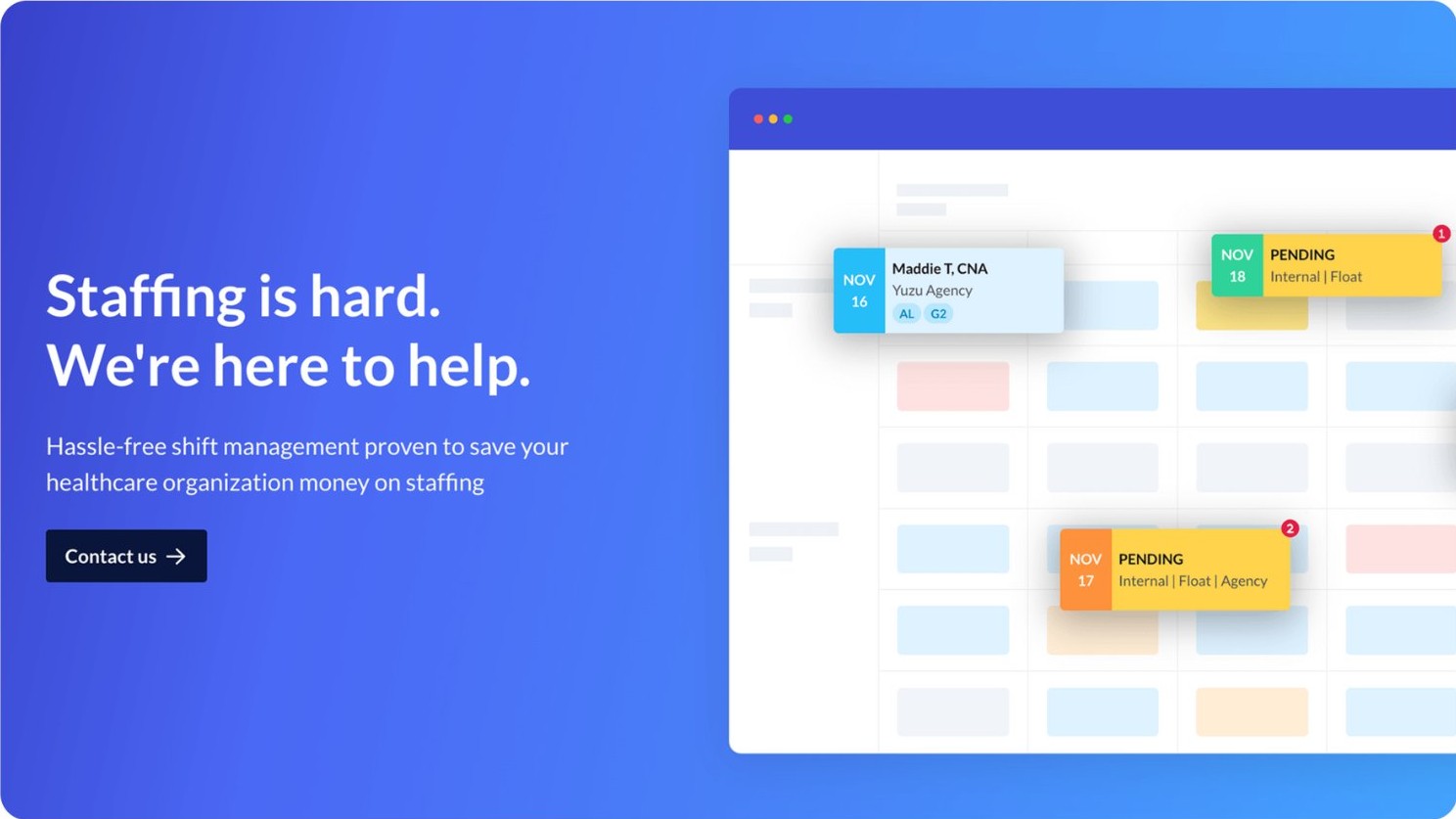
Kevala is a healthcare staffing marketplace + workforce management platform for senior living and post-acute care facilities.
It solved 3 core problems:
- Facilities had chronic staffing shortages.
- Caregivers wanted flexible work + better pay.
- Compliance + credential tracking was painful and manual.
So the product connected:
Care Facilities 🔄 Caregivers (RNs, LPNs, CNAs)
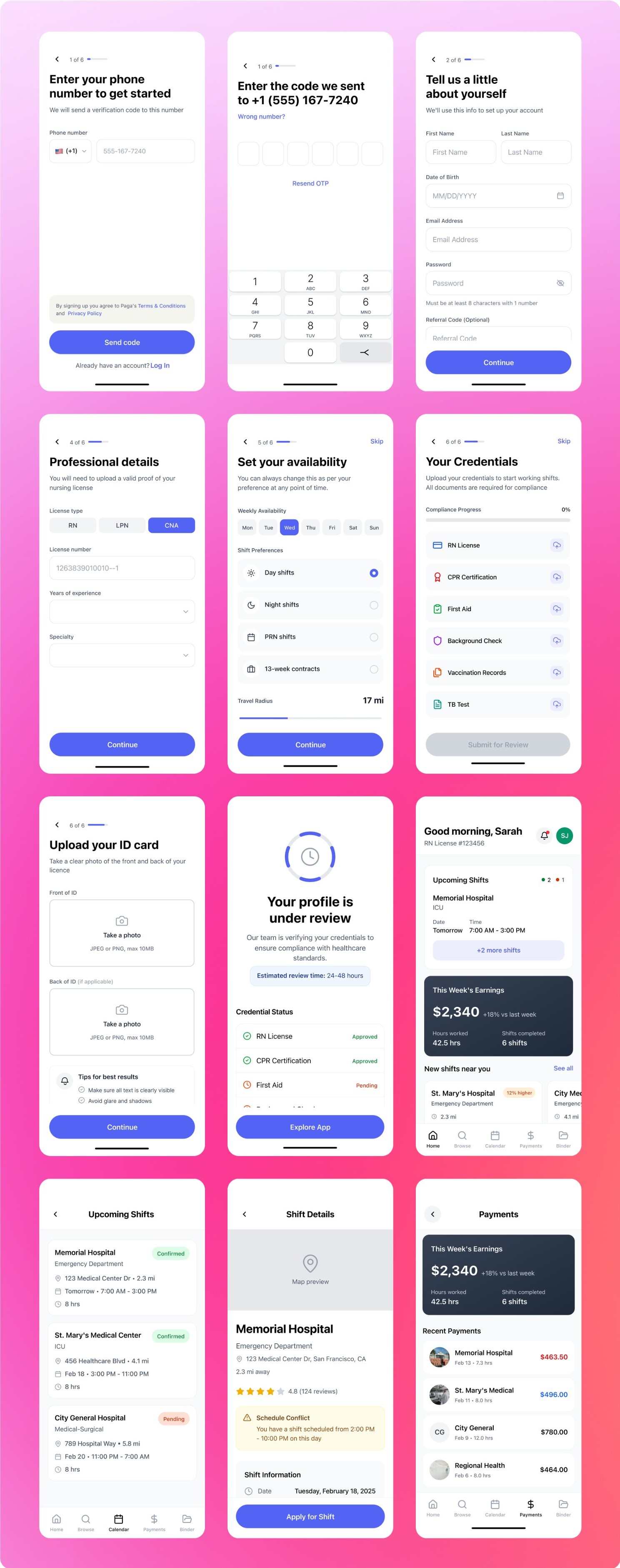
My work focused specifically on designing the caregiver-facing application, enabling nurses and caregivers to onboard, manage their credentials, browse and apply for shifts, and track earnings in a seamless and compliant experience
The Core Problem
Healthcare staffing is fragmented and operationally heavy.
Caregivers face:
- Complicated onboarding
- Repeated credential submissions
- Limited visibility into shift opportunities
- Delayed payments
- Poor communication with facilities
Facilities struggle with:
- Compliance tracking
- Credential verification
- Expiring documents
- No-show risk
- Staffing shortages
We needed to design a system that:
- Simplified compliance
- Increased shift fill rates
- Reduced friction in onboarding
- Created trust between caregivers and facilities
- Made payments transparent
Product Strategy
We identified 5 core pillars for the caregiver app:
- Fast Activation
- Compliance Transparency
- Intelligent Shift Discovery
- Frictionless Shift Execution
- Clear Earnings & Retention Loop
The strategy focused on reducing time-to-first-shift while maintaining regulatory compliance.
Product
Key Takeaway
Designing the caregiver experience for Kevala reinforced how critical it is to balance usability with operational and regulatory requirements. In healthcare staffing, the product must not only feel simple and intuitive for caregivers but also support complex compliance processes behind the scenes. Through this project, I learned how thoughtful onboarding, transparent credential management, and clear shift workflows can reduce friction and build trust in a workforce marketplace. Ultimately, the goal was to empower caregivers to easily find work while helping facilities fill critical staffing gaps—creating a system that benefits both sides of the healthcare ecosystem.